
CANADEM

Imagine an Iceberg: The Impact of Cultural Differences


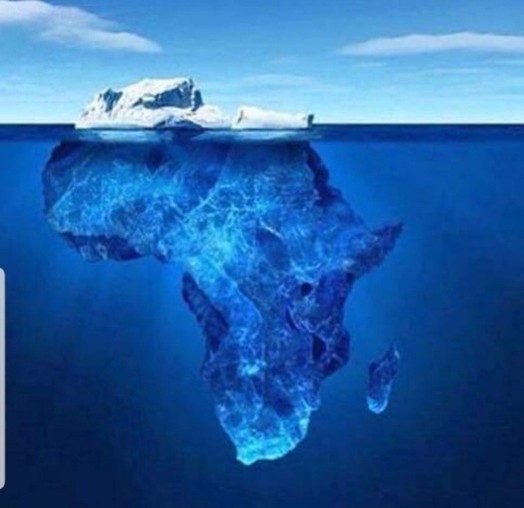
I saw this image in an airport, on my way to a country that was new to me.  I knew lots about what was going on in my destination above the waterline.  I had little insight into what was happening below, and how it related to what I could see.

It is the same for all of us, whether we are encountering a new country, a new organization, or a new relationship.  We react to the visible and interpret it based on what we already know or on what we imagine.

The consequence may be misunderstandings and a failure to achieve what we want in an effective and efficient way.   Differences in priorities and behaviors are logical to others and shaped by what lies below the surface that we can see.

A small part of an iceberg, perhaps 10%, is visible above the waterline.  The rest, getting ever broader towards its base and holding up the visible part, is hidden below the surface. So it is with culture.

Geography and Climate

The base of the cultural iceberg is geography and climate.  All humans have the same needs, most profoundly the ability to survive in a particular environment and to raise the next generation.  The place in which each group finds itself means that it will need to do that in a unique way.  Is there abundant rich soil, encouraging larger cooperative social groups?  Are people living in more challenging environments that only allow small groups to survive in a given space?   Such factors shape what is seen as normal, even inevitable.  This is also the root of many cross-cultural misunderstandings.

History

Our geography shapes our history.  The location of the Caribbean islands put them in the path of European explorers looking for the orient. Their potential for hosting plantations fed the slave trade and created the mix of peoples who live there now.  What is now Afghanistan lay in the middle of a highway of movement of civilizations for thousands of years, both enriching the culture and creating a nation of people determined to defend their land.

Values and Social Structures

The environment and history shape what is important to a culture – its values – and the ways that societies are structured.  Must leaders be warriors? Do those who intercede with the divine have a lot of influence? Are the old and wise or the young and strong important? What roles do men and women play?    The answers are the best each society can create at that time and in that circumstance.

Norms of behavior

In each culture there are internalized and unwritten rules about how to do things.  What is the ‘correct’ way to greet someone?  How do we find agreement and deal with differences of opinion? What comes first – building and maintaining relationships or getting jobs done quickly? All of these things are known yet largely invisible – and confusing to those who have different norms.

The institutions at the waterline

Institutions evolve in cultures to maintain order and to manage the pressures for change that come from outside. Institutions that are ‘legitimate’ can manage those changes.  Those that are artificial (for instance government or religious or educational institutions imposed by conquering societies) have a hard time affecting sustainable, positive change – unless by force, which tends to have the impact of fracturing the iceberg and producing dysfunctional societies.

The process of change

Change is inevitable.  What tends not to work well is change that is forced from the outside.  Outsiders see a state of affairs or behaviors and look within their own cultural context to make sense of it and devise strategies to ‘improve’ things for the others.  Because outsiders often fail to understand the targeted population’s circumstances, history and values, the solution may be inappropriate. It may not be accepted, ‘owned’ and sustained by the people it affects.   The solution may even turn out to be destructive.  Effective, sustainable change must come from within.  Outsiders can play a valuable role – by sharing ideas, access to technologies and ways of doing things, by listening and being supportive.

When icebergs collide

When icebergs, literal or cultural, encounter one another they often don’t collide above the waterline.  Because of their shape they maintain some distance at that level, perhaps even admiring each other’s uniqueness and beauty.  Below the waterline, however, they may grind together.  When working with communities in another culture our failures to understand one another usually come from not comprehending the impact of place, history and values on shaping what appears to each of us to be logical.

Bridging the cultural divide

To close the gap of understanding and to be effective in supporting positive and sustainable change, we need to look both within our own iceberg to understand why we are the way we are and within theirs to more fully appreciate the differences.

 

Recent Posts

Practicing Safe Stress: Introducing CANADEM Notes

April 23, 2026
An introduction to CANADEM Notes and the role they play in helping deployees build resilience, manage stress, and…
Continue reading

The Home Front: Family and Friends While I Am Away

April 23, 2026
A thoughtful look at how missions affect loved ones at home, with practical reminders on staying connected, preparing…
Continue reading

With Eyes Wide Open: Planning to Stay Safe

April 23, 2026
Practical advice for staying safe while travelling and working abroad, from preparing documents and packing smart to developing…
Continue reading

Take Two Aspirins: Planning to Stay Healthy

April 23, 2026
A practical guide to protecting your health on mission, covering travel preparation, illness prevention, useful medications, and simple…
Continue reading

What Happens in Vagus: Planning to Stay Sane

April 23, 2026
An accessible reflection on stress, the vagus nerve, and simple ways to calm the body and mind through…
Continue reading

Our Reaction to Being There: The Ups and Downs of a New Job

April 23, 2026
A practical reflection on culture shock, adjustment, and the emotional ups and downs that often come with settling…
Continue reading
Respect for the environment
An ever-increasing awareness that caring for the environment is the responsibility of us all, regardless of our area of expertise or profession, has propelled CANADEM to place more focus on our own global footprint as well as that of our sector. During this Period, we have embarked on a challenge to enhance our learning regarding the environment and how we interact with it – including efforts to create a baseline and targets for improving how we deal with our natural environment. We are therefore making a conscious and transparent effort to measure and manage the way we affect the natural world around us, hopefully becoming better caretakers along the way.
Impact Driven
CANADEM has always valued the positive impact we make in the world as a foundation of our work. It is this guiding principle that has led us to form lasting partnerships, in support of other entities, if we feel they can add greater value than we can at CANADEM. Searching for our comparative advantage, while avoiding falling into a simple race to find funding opportunities, is therefore essential to CANADEM. As we see an increasing number of individuals suffering from the consequences of conflict in the world, and prepare for even greater numbers of environmental disasters, the need to prioritise the areas where we can make a real difference and combine our efforts with like-minded entities, is vital to achieving success.
Efficiency
The objective of CANADEM’s leadership has always been to find the most innovative and cost-effective ways to contribute to communities in need, and not to place the growth of numbers and our budgets at the centre of our efforts. As a result, we have adopted a light footprint in terms of our human resources complement and infrastructure, making use of the latest technology, and empowering our small team to be as innovative and flexible in solving problems as our procedures allow. Our structures allow us to scale up and down as required, and for staff to work in different teams, according to the needs of the moment. Our 30 years of experience has taught us what our core capacities are and how to allocate precious resources.
Accountability & Transparency Values
From CANADEM’s earliest beginnings as a Government of Canada project, and during its rapid evolution into an independent NGO with its roots in international service, the principles of accountability and transparency have been a component of CANADEM’s DNA. Accountability for the use of public funds has been incorporated into procedures that needed to respond to the high standards of government. Transparency has been the vehicle to ensure the vital accountability that CANADEM maintains. CANADEM’s headquarters team is a well-trained group of committed individuals who believe in the important work they do – including the conviction that providing the best value possible to the communities and donors we serve is a primary component of our job. CANADEM’s rules and procedures are therefore established to ensure that every step of the way we are confident of our work, and can demonstrate its efficiency and effectiveness.
People-Centered Values
Our work is about deploying people to help people. It is therefore of paramount importance to us that we are all relating to individuals in our chain of service delivery in a way that is respectful, understanding, considerate, and that brings out the best in us. Our internal working context is designed to foster humanity, fairness and support among our staff, which in turn aims to foster those same qualities among the experts we deploy. We have invested in a team of individuals (our Duty of Care Team), who provide a safety net for those experts we deploy. By taking care of our staff members and our deployed experts, we ensure that we have an effective flow of communication between all aspects of our operation. Our experienced and motivated staff feel supported, and are in turn able to support our experts in times of stress and prevent any potential problems from occurring.
Diversity & Inclusion Values
Ensuring an inclusive workplace that integrates diversity in terms of gender, language, culture, ethnicity and religion, is of prime importance for CANADEM both internally and with regards to our work with partners. We have made significant progress in attracting experts from 178 countries around the world – including from countries that are recipients of international assistance – so that a diversity of perspectives, understanding and expertise may be integrated into all operations that CANADEM supports. From our fair and transparent selection process, to our supportive Duty of Care Team (which ensures that individuals deployed have the resources they need to feel comfortable and confident in their work), we have invested significant energy in fostering diversity and inclusion within our roster system, in our election monitoring deployments, and in our own direct implementation of programming, at headquarters and in the field.
Partnership Values
The majority of our experts work within the assistance operations of our partners. Partnership is therefore of primary importance and value to us, and is key to the way we operate. Our many long-term relationships with other actors have been forged by promoting trust and understanding. The ability to work together with other actors, and not in competition, has allowed CANADEM to enhance the work of governments or organizations by injecting vital expertise, and targeting it where it is needed most. We believe that we can create a greater impact, when we work in partnership.