CANADEM

Depuis 1996. Mobilisation d'experts dans le monde entier.

HCR-Roumanie


~ Une approche de tolérance zéro ~
Lauren Borg avec le HCR en Roumanie
Spécialiste d’urgence de la protection contre l’exploitation et les abus sexuels


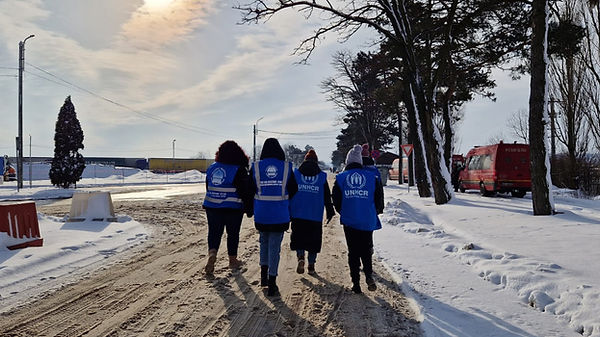
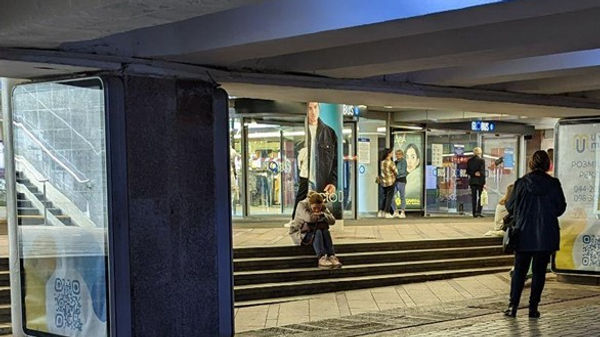
Depuis le début du conflit en Ukraine en février 2022, on a enregistré plus de 1,8 million de passages de la frontière vers la Roumanie, et plus de 107 000 réfugiés ont obtenu une protection dans le pays. En janvier 2023, les femmes et les enfants constituaient la majorité – 77 % – des réfugiés qui franchissaient la frontière ukraino-roumaine. Le profil de la plupart des réfugiés d’Ukraine – ménages dirigés par des femmes, personnes âgées et enfants – les expose à un risque accru d’exploitation et d’abus sexuels (EAS), y compris de la part de travailleurs humanitaires.

Tandis que des cas d’exploitation et d’abus sexuels continuent d’être signalés dans divers contextes humanitaires et de développement, le HCR, en tant qu’agence chef de file de la coordination de l’intervention en faveur des réfugiés d’Ukraine, a fait de la protection contre l’exploitation et les abus sexuels (PEAS) une priorité dès le départ. J’ai été déployée par CANADEM en août 2022 comme spécialiste d’urgence de la PEAS pour travailler avec le HCR en Roumanie. L’implication de travailleurs humanitaires dans l’exploitation et les abus sexuels constitue une violation flagrante de la confiance que placent en eux les personnes envers qui ils sont avant tout redevables, c’est-à-dire les personnes qu’ils servent.

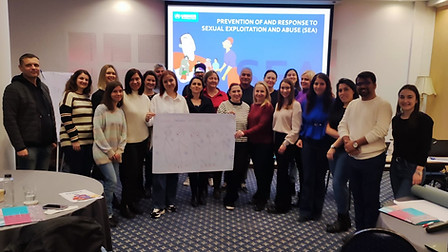
Aussi sombre que cela puisse paraître, le risque d’exploitation et d’abus sexuels continuera probablement d’imprégner les contextes humanitaires. Il est donc impératif que les agences d’aide et les organismes poursuivent leurs efforts afin d’empêcher les incidents de se produire en premier lieu, de mettre en place des mécanismes de signalement sûrs et accessibles et d’adopter une approche centrée sur les victimes lorsque de tels incidents surviennent. À cette fin, pendant mon déploiement avec CANADEM, j’ai donné la priorité à la mobilisation des partenaires du HCR pour m’assurer que des mesures de protection sont en place et pour appuyer le renforcement des capacités organisationnelles de prévention de l’EAS et d’intervention en la matière. 

Plusieurs partenaires – dont beaucoup sont de petits organismes locaux – sont nouveaux dans le domaine humanitaire, plusieurs ayant surtout travaillé à des projets sociaux avant l’afflux de réfugiés dans le pays. Les capacités de protection contre l’EAS étaient généralement faibles, mais la volonté de renforcer les mesures de protection était évidente dès le départ. Après avoir évalué la capacité des partenaires à prévenir, à atténuer et à répondre à l’exploitation et aux abus sexuels commis par des membres du personnel, j’ai élaboré avec eux des plans d’action visant à renforcer les mesures de protection et les capacités à l’échelle de l’organisme, notamment en matière de politiques internes, de processus de RH, de mécanismes de signalement, de procédures d’enquête et d’aide aux victimes. Les agences de l’ONU exigent que les organismes partenaires respectent les normes fondamentales en matière de PEAS. Mon déploiement avec CANADEM a permis au HCR de disposer de personnel dédié à la PEAS. Cela a contribué à faire en sorte que les partenaires soient accompagnés pour satisfaire à toutes les exigences de ces normes, ce qui renforce directement l’environnement de protection global des personnes ayant besoin d’aide humanitaire.

Le renforcement des capacités organisationnelles de protection contre l’EAS est essentiel pour amorcer un changement de culture au sein des organismes humanitaires et garantir que la responsabilité incombe aux organismes et à leur personnel. Ce n’est qu’à cette condition qu’un changement systémique peut se réaliser et que des politiques de tolérance zéro à l’égard de l’exploitation et des abus sexuels puissent être concrètement appliquées.

Autres récits inspirants

FNUAP-Brésil

septembre 29, 2025
Lisez le récit de Tatiana Almeida, spécialiste des communications de CANADEM au Brésil

UNICEF-Éthiopie

septembre 29, 2025
Lisez le récit de Tabasum Abdul-Rasul, coordonnatrice sous-nationale du cluster EAH en Éthiopie

FNUAP-Afghanistan

septembre 29, 2025
Lisez le récit d'Emile Padja, logisticien en Afghanistan.

OMS-Ukraine

septembre 29, 2025
Lisez le récit de Lilit Gevorgyan, spécialiste en SIG en Ukraine.

FNUAP-Mozambique

septembre 29, 2025
Lisez le récit de Ken Otieno, expert en violence centrée sur le genre, au Mozambique.

FNUAP-Moldavie

septembre 29, 2025
Lisez le récit d’Edmon Alashotie, spécialiste en gestion d’entrepôt en Moldavie.
Respect for the environment
An ever-increasing awareness that caring for the environment is the responsibility of us all, regardless of our area of expertise or profession, has propelled CANADEM to place more focus on our own global footprint as well as that of our sector. During this Period, we have embarked on a challenge to enhance our learning regarding the environment and how we interact with it – including efforts to create a baseline and targets for improving how we deal with our natural environment. We are therefore making a conscious and transparent effort to measure and manage the way we affect the natural world around us, hopefully becoming better caretakers along the way.
Impact Driven
CANADEM has always valued the positive impact we make in the world as a foundation of our work. It is this guiding principle that has led us to form lasting partnerships, in support of other entities, if we feel they can add greater value than we can at CANADEM. Searching for our comparative advantage, while avoiding falling into a simple race to find funding opportunities, is therefore essential to CANADEM. As we see an increasing number of individuals suffering from the consequences of conflict in the world, and prepare for even greater numbers of environmental disasters, the need to prioritise the areas where we can make a real difference and combine our efforts with like-minded entities, is vital to achieving success.
Efficiency
The objective of CANADEM’s leadership has always been to find the most innovative and cost-effective ways to contribute to communities in need, and not to place the growth of numbers and our budgets at the centre of our efforts. As a result, we have adopted a light footprint in terms of our human resources complement and infrastructure, making use of the latest technology, and empowering our small team to be as innovative and flexible in solving problems as our procedures allow. Our structures allow us to scale up and down as required, and for staff to work in different teams, according to the needs of the moment. Our 30 years of experience has taught us what our core capacities are and how to allocate precious resources.
Accountability & Transparency Values
From CANADEM’s earliest beginnings as a Government of Canada project, and during its rapid evolution into an independent NGO with its roots in international service, the principles of accountability and transparency have been a component of CANADEM’s DNA. Accountability for the use of public funds has been incorporated into procedures that needed to respond to the high standards of government. Transparency has been the vehicle to ensure the vital accountability that CANADEM maintains. CANADEM’s headquarters team is a well-trained group of committed individuals who believe in the important work they do – including the conviction that providing the best value possible to the communities and donors we serve is a primary component of our job. CANADEM’s rules and procedures are therefore established to ensure that every step of the way we are confident of our work, and can demonstrate its efficiency and effectiveness.
People-Centered Values
Our work is about deploying people to help people. It is therefore of paramount importance to us that we are all relating to individuals in our chain of service delivery in a way that is respectful, understanding, considerate, and that brings out the best in us. Our internal working context is designed to foster humanity, fairness and support among our staff, which in turn aims to foster those same qualities among the experts we deploy. We have invested in a team of individuals (our Duty of Care Team), who provide a safety net for those experts we deploy. By taking care of our staff members and our deployed experts, we ensure that we have an effective flow of communication between all aspects of our operation. Our experienced and motivated staff feel supported, and are in turn able to support our experts in times of stress and prevent any potential problems from occurring.
Diversity & Inclusion Values
Ensuring an inclusive workplace that integrates diversity in terms of gender, language, culture, ethnicity and religion, is of prime importance for CANADEM both internally and with regards to our work with partners. We have made significant progress in attracting experts from 178 countries around the world – including from countries that are recipients of international assistance – so that a diversity of perspectives, understanding and expertise may be integrated into all operations that CANADEM supports. From our fair and transparent selection process, to our supportive Duty of Care Team (which ensures that individuals deployed have the resources they need to feel comfortable and confident in their work), we have invested significant energy in fostering diversity and inclusion within our roster system, in our election monitoring deployments, and in our own direct implementation of programming, at headquarters and in the field.
Partnership Values
The majority of our experts work within the assistance operations of our partners. Partnership is therefore of primary importance and value to us, and is key to the way we operate. Our many long-term relationships with other actors have been forged by promoting trust and understanding. The ability to work together with other actors, and not in competition, has allowed CANADEM to enhance the work of governments or organizations by injecting vital expertise, and targeting it where it is needed most. We believe that we can create a greater impact, when we work in partnership.