CANADEM

WHO-Ukraine


~ Data Analysis and the Ukraine War ~
Lilit Gevorgyan in Ukraine with WHO
GIS Specialist

One more war on Earth. We woke up on 24 February with the news that Russia launched a large-scale invasion of Ukraine. After a shock lasting a week I thought Russian soldiers will surrender once in Ukraine and the war of one man will end quickly. I guess that was another myth of the Soviet that people lived happily and together. Panic and the extent of one’s uselessness started to build up and then an email from CANADEM. A week of communication and in mid march I joined WHO Ukraine as a GIS specialist.

Lviv was vibrant and busy. Since I was working with the International Emergency Medical Teams (EMT) coordinating team from WHO, I was invited to attend a workshop organised for Ukrainian Center For Disaster Medicine under the Ministry of Health. This was my very first in person meeting with colleagues from WHO Ukraine and beyond. Learning from and working with people who established the standards for EMTs was self explanatory!

Trip to Ukraine: Impressions on the ground

Kyiv was clean and sad. People were mostly ignoring the air raid sirens and carrying on with their work. I was impressed that streets were super clean, public transport was available, and all services were available. I recovered from my fear of speaking Russian and learnt to seek permission from locals to use Russian for communication. Everyone was kind and they told me as a guest I am welcome to use any language I know. This was very handy as I was also helping my colleagues in communication and getting us around in Kyiv.

After experiencing air alert sirens for a couple of weeks I made peace with the situation and tried to discover the city on my own. In a park next to our hotel I saw many statues and the one dedicated to fallen students during WWII became my favourite in the area.

Yet, my thoughts are always with the population that has no easy access to shelters as we had in our hotels or offices.

My mission for Data Analysis

The staff was moving into the Kyiv country office after working remotely from Lviv for several months. The day has come and I finally met some of my immediate colleagues and had an in person discussion on the situation and our work.

Data management is crucial in emergencies. I have been involved in many activities. Supporting EMT teams, Medical evacuation team (MedEvac), Center for Disaster Medicine etc. We got access to very sensitive information that should be handled with the highest level of security.

After the initial shock of the war Ukrainian officials started to recover and develop adaptive capacity with the help of international agencies. We presented them with tools and solutions and after careful consideration of various scenarios and options came to a conclusion that WHO will help to develop a GIS portal to support spatial and statistical analysis. It was agreed that we develop the tool, train the Ukrainian team at the ministry in order to develop their capacities and hand over the ownership to local authorities. During my mission to Ukraine I had a meeting with the head of Center For Disaster Medicine and we discussed our collaboration and the role of WHO and specialists.

One particular task makes me feel the highest satisfaction every time I think of that project. A colleague from Geneva initiated research to evaluate the impact of war on cancer treatment deliveries. I joined them and worked on spatial analysis of pre and after war data. These results of our analyses reached the headquarters and were presented at a donor conference which led to a more detailed investigation and support for Ukraine. WHO and donors will help to restore cancer treatment infrastructure by starting a new capacity development program already in 2023. Being the main specialist working on the analysis gave me the feeling of the importance of our work in Ukraine. It was challenging, it was overwhelming since we were not able to get desired primary data and yet our dedication gave the results. This was the most convincing point presenting our input in response and in the recovery of the health system.

Another occasion showing the importance of data occurred when I got a call without any advance notice. I was mostly working remotely and could feel the extent of war through communication with my colleagues who were already in Ukraine. I will always remember that call when a colleague from MedEvac operations was emotionally telling me that without data and maps she can not know where to send the teams and how to organise the operations in a safest way.  I remember promising her to develop an online tool to facilitate their activities close to the frontline. I requested 2 hours to organise data they needed and develop tools tailored to their needs. I delivered a very flexible and yet intuitive tool for their operations  and had a sound sleep happy that we could support colleagues on the ground.

Lessons Learned

Be ready to be a good listener even though you are a data analyst and have no background in psychology. Colleagues will approach technical specialists with no clearly defined requests and it’s you who should understand the problem and propose a solution. It’s also important to understand the extent of emergency and time limitations. We always need to do feasibility analysis. Choose between complex and multifunctional and simpler tools.  Situation is changing fast, there is an accessibility problem, lack of infrastructure, rapid decision making etc. Flexibility, teamwork and common sense is essential.

I called the Information Management team a Psychology club: you talk about your problems, we structure them and give solutions!

I learned the importance of a safe environment provided by employers. The absolute support I received from CANADEM in terms of operational guidance, mental health provided a psychological safety buffer and absolute trust in colleagues. I had the most professional and yet human centred experience with them. My gratitude to them and UK DFID for supporting humanitarian agencies when they need it the most.   

More Inspiring Stories

UNICEF-South Sudan

September 29, 2025
Read a photo journal of CANADEM consultant Jan Gerrit Brouwer was deployed to South Sudan with UNICEF

UNHCR-Jordan

September 29, 2025
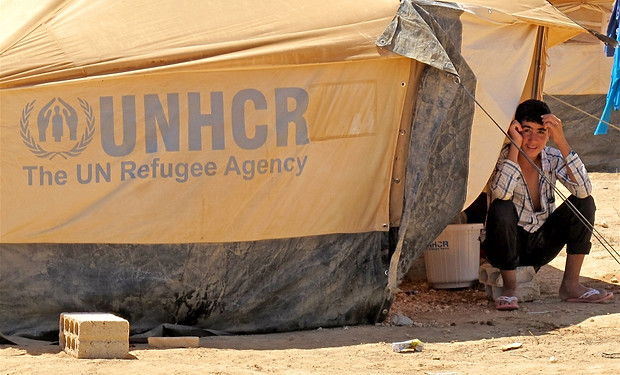
Read Phillip's interview with Mr. Mahmoud Othman, a Damascus resident who found refuge in Amman

UNICEF-Croatia

September 29, 2025
Read Elaine's story, a CANADEM consultant deployed to Croatia with UNICEF

WFP-CAR

September 29, 2025
Read the biography of Ernest-Moise Mushekuru, Food Security Cluster Coordinator in Central African Republic

UNFPA-Brazil

September 29, 2025
Read Tatiana Almeida's story, CANADEM's Communication Specialist in Brazil

UNICEF-Ethiopia

September 29, 2025
Read Tabasum Abdul-Rasul's story as a Sub-National WASH Cluster Coordinator in Ethiopia
Respect for the environment
An ever-increasing awareness that caring for the environment is the responsibility of us all, regardless of our area of expertise or profession, has propelled CANADEM to place more focus on our own global footprint as well as that of our sector. During this Period, we have embarked on a challenge to enhance our learning regarding the environment and how we interact with it – including efforts to create a baseline and targets for improving how we deal with our natural environment. We are therefore making a conscious and transparent effort to measure and manage the way we affect the natural world around us, hopefully becoming better caretakers along the way.
Impact Driven
CANADEM has always valued the positive impact we make in the world as a foundation of our work. It is this guiding principle that has led us to form lasting partnerships, in support of other entities, if we feel they can add greater value than we can at CANADEM. Searching for our comparative advantage, while avoiding falling into a simple race to find funding opportunities, is therefore essential to CANADEM. As we see an increasing number of individuals suffering from the consequences of conflict in the world, and prepare for even greater numbers of environmental disasters, the need to prioritise the areas where we can make a real difference and combine our efforts with like-minded entities, is vital to achieving success.
Efficiency
The objective of CANADEM’s leadership has always been to find the most innovative and cost-effective ways to contribute to communities in need, and not to place the growth of numbers and our budgets at the centre of our efforts. As a result, we have adopted a light footprint in terms of our human resources complement and infrastructure, making use of the latest technology, and empowering our small team to be as innovative and flexible in solving problems as our procedures allow. Our structures allow us to scale up and down as required, and for staff to work in different teams, according to the needs of the moment. Our 30 years of experience has taught us what our core capacities are and how to allocate precious resources.
Accountability & Transparency Values
From CANADEM’s earliest beginnings as a Government of Canada project, and during its rapid evolution into an independent NGO with its roots in international service, the principles of accountability and transparency have been a component of CANADEM’s DNA. Accountability for the use of public funds has been incorporated into procedures that needed to respond to the high standards of government. Transparency has been the vehicle to ensure the vital accountability that CANADEM maintains. CANADEM’s headquarters team is a well-trained group of committed individuals who believe in the important work they do – including the conviction that providing the best value possible to the communities and donors we serve is a primary component of our job. CANADEM’s rules and procedures are therefore established to ensure that every step of the way we are confident of our work, and can demonstrate its efficiency and effectiveness.
People-Centered Values
Our work is about deploying people to help people. It is therefore of paramount importance to us that we are all relating to individuals in our chain of service delivery in a way that is respectful, understanding, considerate, and that brings out the best in us. Our internal working context is designed to foster humanity, fairness and support among our staff, which in turn aims to foster those same qualities among the experts we deploy. We have invested in a team of individuals (our Duty of Care Team), who provide a safety net for those experts we deploy. By taking care of our staff members and our deployed experts, we ensure that we have an effective flow of communication between all aspects of our operation. Our experienced and motivated staff feel supported, and are in turn able to support our experts in times of stress and prevent any potential problems from occurring.
Diversity & Inclusion Values
Ensuring an inclusive workplace that integrates diversity in terms of gender, language, culture, ethnicity and religion, is of prime importance for CANADEM both internally and with regards to our work with partners. We have made significant progress in attracting experts from 178 countries around the world – including from countries that are recipients of international assistance – so that a diversity of perspectives, understanding and expertise may be integrated into all operations that CANADEM supports. From our fair and transparent selection process, to our supportive Duty of Care Team (which ensures that individuals deployed have the resources they need to feel comfortable and confident in their work), we have invested significant energy in fostering diversity and inclusion within our roster system, in our election monitoring deployments, and in our own direct implementation of programming, at headquarters and in the field.
Partnership Values
The majority of our experts work within the assistance operations of our partners. Partnership is therefore of primary importance and value to us, and is key to the way we operate. Our many long-term relationships with other actors have been forged by promoting trust and understanding. The ability to work together with other actors, and not in competition, has allowed CANADEM to enhance the work of governments or organizations by injecting vital expertise, and targeting it where it is needed most. We believe that we can create a greater impact, when we work in partnership.