The Food Management Improvement Project (FMIP) is a WFP flagship project which supports the Government of Ethiopia through the National Disaster Risk Management Coordination Commission (NDRMC) to increase the efficiency and accountability of the management of the food-aid supply-chain during and after humanitarian disasters.
The NDRMC is responsible for the overall coordination and leadership of Ethiopia’s disaster risk management strategy approach and is WFP’s biggest cooperating partner in Ethiopia. WFP and the NDRMC jointly manage the largest food aid pipeline in Ethiopia with Commission having the responsibility to transport commodities to more than 1,500 locations every six weeks.
In November 2016, Perseverence Ganga, a CANADEM Consultant with the WFP in Ethiopia, participated in a various field visits to Tigray, Amhara and Afar Regions with representatives from Global Affairs Canada and the UK’s Department for International Development (DFID).
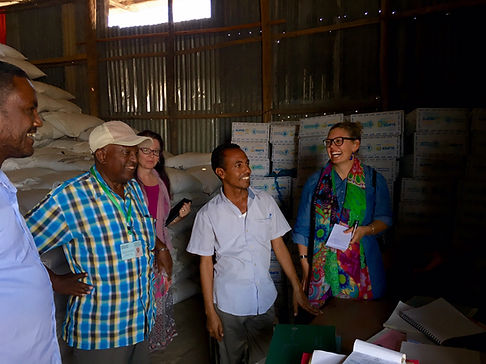
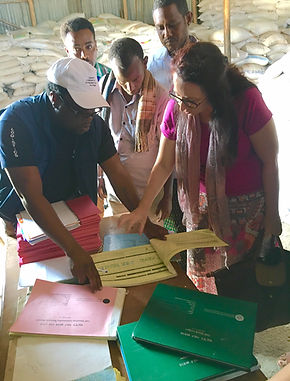
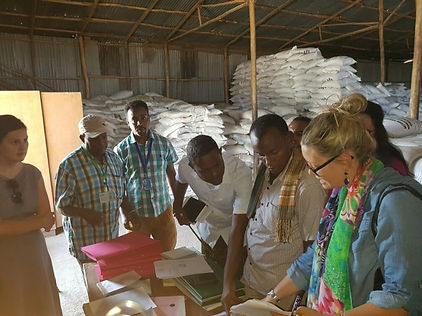
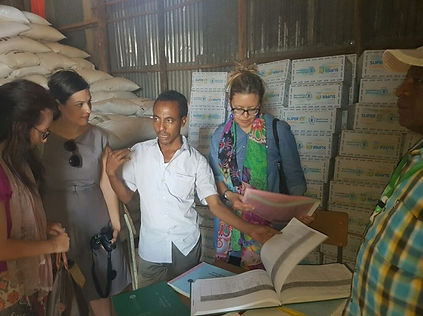
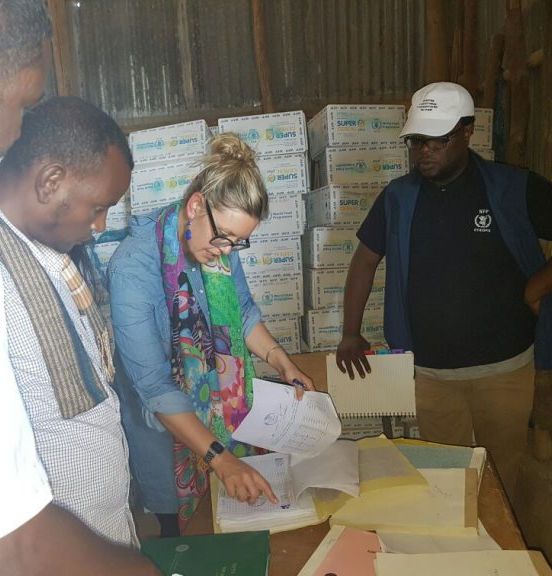
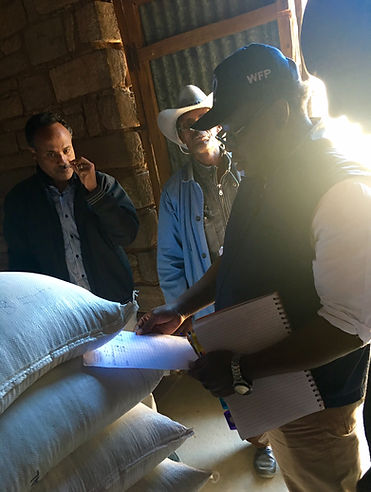
Global Affairs Canada First Secretary and International Development Officer, along with DFID Humanitarian Affairs Officer inspect commodity accounting documents at a Food Distribution Warehouse during a field visit in the Afar region. The storekeeper explains how he accounts for the commodities using FMIP documentation templates. Perseverance clarifies further to the First Secretary.
Global Affairs Canada First Secretary and International Development Officer, along with DFID Humanitarian Affairs Officer inspect commodity accounting documents at a Food Distribution Warehouse during a field visit in the Afar region. The storekeeper explains how he accounts for the commodities.
DFID Humanitarian Affairs Officer Heidi Carrubba and CANADEM Consultant Perseverence Ganga inspect commodity accounting documents at Ayssaita Food Distribution Point in the Afar region.
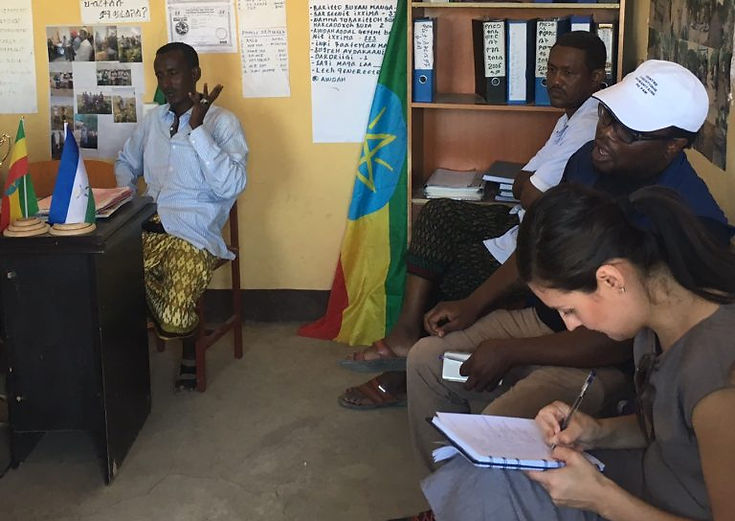
Global Affairs Canada International Development Officer, Alicia Sosa, with CANADEM Consultant Perseverence Ganga at an Agriculture Office meeting with Government Officials in the Afar region.
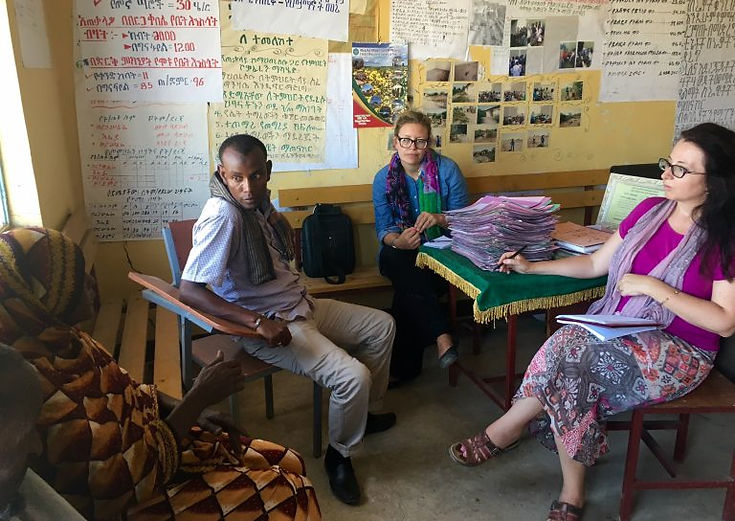
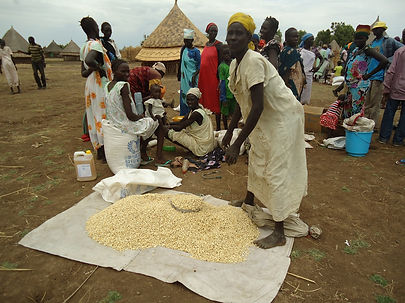
Global Affairs Canada First Secretary for Development in Ethiopia, Cathy Tremblay, and DFID Humanitarian Affairs Officer, Heidi Carrubba, discuss the impact of food assistance with a female beneficiary (left) in Afar.
Global Affairs Canada First Secretary and International Development Officer, along with DFID Humanitarian Affairs Officer meet with Ayssaita Woreda Agricultural Office officials in the Afar region.
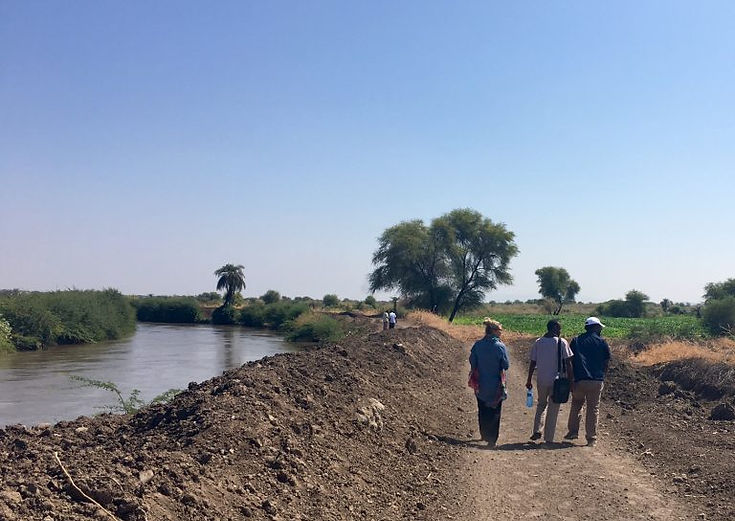
DFID Humanitarian Affairs Officer Heidi Carrubba and CANADEM Consultant Perseverence Ganga walk to inspect a flooding site with local officials in Afar region.
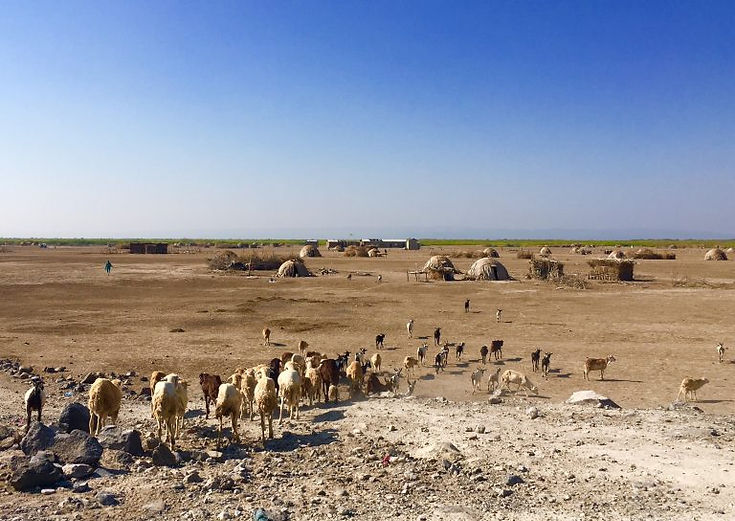
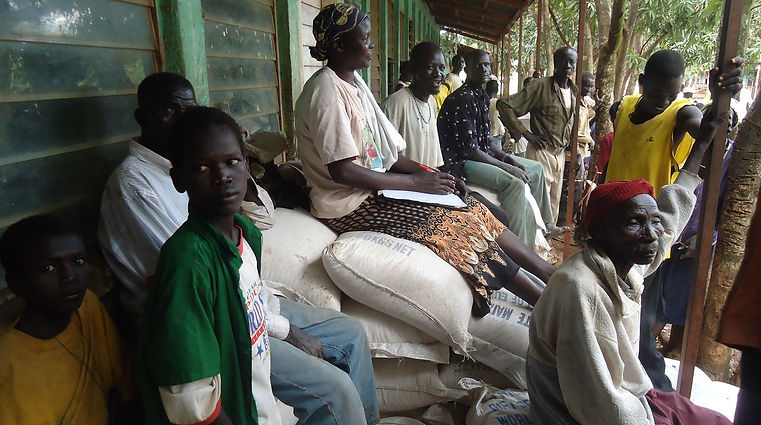
A typical pastoral community in the dry lowland region of Afar illustrates temporary housing, lack of infrastructure, herding animals, and a high rates of food insecurity.
DFID Humanitarian Affairs Officer Heidi Carrubba and CANADEM Consultant Perseverence Ganga discuss warehousing management practices with a team in Tigray.
CANADEM Consultant Perseverence Ganga inspects warehouse documentation in Tigray and provides feedback to storekeepers on how to improve their approaches.
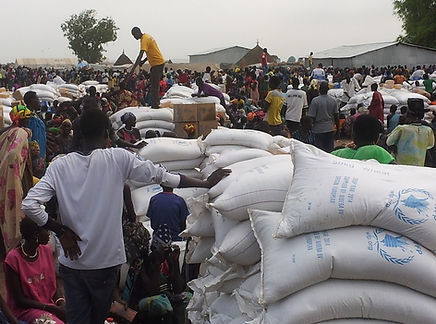
DFID Humanitarian Affairs Officer Heidi Carrubba and CANADEM Consultant Perseverence Ganga monitor a food distribution site in Tigray region.
Photo Journal from the Field: Humanitarian Response in Ethiopia
When I first received the email from CANADEM about a possible secondment, I was leaving Damascus, Syria having completed close to 2 years in the heat of the war as a Food Security Cluster Coordinator. My first reaction to the email was, ‘no way’. Syria had really taken a toll on me, I was emotionally tired and burnt out from my time there. In those 2 years, I had only seen my family for less than 24 days and I just couldn’t take it anymore. On reading through the details of the secondment, the voices in my head started telling me, “you are a humanitarian worker and your job is not done by many”, and “of course your family needs you but so do these suffering families who struggle to put food on the table every meal time.” However when I noticed Ethiopia as the Duty Country, I just could not resist anymore. I had unfinished business in Ethiopia.
Having worked for WFP in Ethiopia previously and knowing the challenges there, I always knew I had more that I could bring to the to their operation. In my previous stint in Ethiopia I was based in the field and I was committed to returning if there was a possibility to work in the Country Office in Addis Ababa as I felt I could bring a lot to the operation. The position with CANADEM met my specific skills and was of great interest in terms of my unfinished business. When I boarded the flight to Addis in March 2016, I was a man on a mission.
The Food Management Improvement Project is a flagship WFP capacity building initiative which aims to build the Government of Ethiopia’s capacity in supply chain management to improve the efficiency in emergency preparedness and response, whilst maintaining accountability and visibility for food aid resources in the supply chain. My position entailed creating a Monitoring and Evaluation (M&E) System, and overall M&E capacity for the Ethiopia National Disaster Risk Management Commission. I was also tasked with operationalizing the M&E System whilst coordinating M&E and Information Management for the Project and the Ethiopian Government.
What makes the job of a CANADEM expert interesting is you are expected to hit the road running literary. In my first few days on the job, WFP and the Government tasked me to devise a way to quickly collect and analyze food aid data across the supply chain to develop a better understanding of the bottlenecks affecting the efficiency of the humanitarian response.
In a few days I had set up several teleconference meetings with WFP Field Offices and within a week, we had set up a remote telephone based monitoring system to collect information from the various districts. Within a few weeks, the Logistic Cluster was activated in Ethiopia and our project team was heavily involved in the setting up of the cluster mechanism. I was also heavily involved in the Logistics Capacity Assessments that helped to define the interventions of the Cluster in Ethiopia. As the cluster was fully operational, the remote monitoring system that I helped to set up became a key component of the tools to determine the impact of the Cluster capacity investments over the coming months. Working with the Cluster, we refined and customized the system to be able to collect information on dates of dispatches, dates of confirmed deliveries, as well as start and end dates of distributions. This information helps WFP and other Cluster partners, including USAID funded NGOs and the Government National Disaster Risk Management Commission (NDRMC), to optimize their supply chain systems to be able to move food from warehouses to beneficiaries within a 4-week cycle. This is the standard cycle as beneficiary rations for relief food aid are meant to save lives and is intended to last only 4 weeks.
Within the 5 months I have been in this role I am happy as I am contributing to what I have always wanted to contribute to the Ethiopian operation, including helping the WFP, the Ethiopian Government and partners to improve efficiencies and develop reporting systems that can be comparable with WFP operations across the world.
CANADEM has helped me to settle in the position with tremendous support. The Ethiopia operation is immense, with over 10.2 million under relief food and close to 5 million people receiving safety net assistance. It is a country of amazing opportunities but also faces a multitude of challenges as it is prone to natural hazards, like the current El Nino that affect communities’ capacity to be resilient. I hope my contribution to the Food Management Improvement Plan (FMIP) project will come to fruition as assist in improving overall capacity. I am proud to be part of the CANADEM Global pool of Associates that has led me to this opportunity.
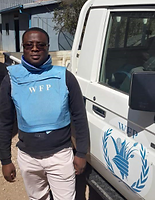
Perseverence Ganga is a Zimbabwean with over 15 years of experience with the UN, Global Food Security Cluster and NGOs in Africa and the Middle East. He was a Food Security Cluster Coordinator in Damascus, Syria prior to his secondment with CANADEM WFP Ethiopia. He has previous experience working in Jordan, Turkey, Senegal, Kenya, Uganda and Zimbabwe. A nutritionist by profession, Perseverence also holds a Masters in Applied Development Studies from Reading University in UK, and a Master’s in Public Health from University of Western Cape in South Africa
More Inspiring Stories