
CANADEM

UNICEF-Ethiopia

The child looked at his mother, who strongly pressed his hand. The desert stretched to the horizon. They walked in single file without looking back. Not far away, other people marched in single file to the horizon far ahead. Silently.

Few murmurs interrupted the ominous silence at sunset on the African savannah; intermittent voices let slip laments and prayers. Somewhere in this piece of Africa, everything had been turned upside down, the life, the people, the flora and fauna.

“Mom, where are we going?” whispered the child

“In the neighbouring country, we have to cross a border, but you will have to walk a lot. Once there, we are going to live there, people will help us.”

“Why?” the child questioned with the candour of his 3 years, “Where is Dad? My elder sister? Our sheep? Grandma?”

Without answering, the mother stopped, grabbed the child, settled him on his back, firmly tied him with a cloth and ordered, “Sleep, night has fallen.”

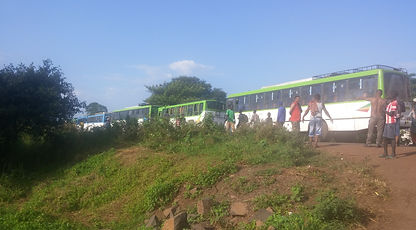
The march continued. To reach the border of the neighbouring country, walkers travel thousands of kilometers. At the intersection of a runway, some stop, the richest waiting for a bus that will take them to the border. Others wait for a smuggler to help them to cross the border if they have paid thousands of francs in local currency. Without money, the woman took the direction of the marchers who could not afford the bus, and she continued to walk. For three days and four nights again.

At the border, thousands of people were waiting. For four days, refugee groups were blocked at the border, guarded by armed soldiers, as negotiations took place between UNHCR and the host countries.

The Eldorado in front of her eyes, the woman looked up and stared at the huge subdivision of houses with white and blue roofs, a UNHCR refugee camp guarded by armed police.

The presence of the UN and various NGOs in the camps reassured those thousands of people coming from so far away that their lives and those of their children might be safe.

Suddenly, as the sun was setting, the gate at the border opened and the human tide walked in silence under the stoic gaze of the military. They each had a hand placed on the trigger of their Kalashnikovs to deal with any eventuality or riot.

The boy squirmed and she undid his loincloth. Stretching his stiff hands and legs, he asked, “Where are we Mom?”

“In Ethiopia, Pagak in the Gambella region. We are in western Ethiopia.”

“People here are nice, they are not going to kill us?”

“I do not know, what I know is that we will live in a refugee camp, managed by the United Nations and we can now breathe. One day at time.”

“The United Nations?”

“Yes my child, it is the only salvation for us and all those who came with us.”

Starting at 5:00 AM, in the dampness of the tropical morning, the camp was alive with action. Like a swarm of bees, aid workers were busy. While UNHCR conducts the registration of refugees, other UN agencies guarantees the protection of unaccompanied children and ensures that essential services such as housing, medical care, water and sanitation, are in place to accommodate the refugees.

The International Organization for Migration (IOM) organized several convoys to facilitate the relocation of refugees to more appropriate places in the Gambella region.The World Food Programme (WFP) provides refugees with high-energy biscuits and water and other forms of basic assistance upon arrival.

“Yes my child, it is the only salvation for us and all those who came with us.”

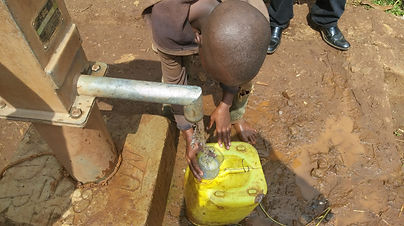
Supported by UNICEF and WHO, the Ethiopian Ministry of Health has set up a triage point where primary health care needs are assessed, children are screened and vaccinated, malnutrition is detected and treated immediately, and the drinking water supply is ensured. Children and adults who are too sick or malnourished are referred to the medical center that Doctors Without Borders has set up in the camps.

Other agencies are responsible for activities essential to the survival of the camp including: hygiene, psychosocial support for children, family tracing, reunification and care of injured children. UNICEF has also built schools in the refugee camps. The woman looked up and smiled to his son, “Tomorrow you will go to this school. You’ll see here we will be protected.”

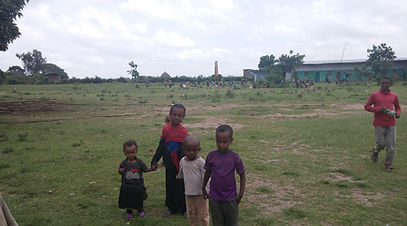
Every day more than 1,200 refugees arrive from South Sudan. Gambella has already hosted approximately 300,000 refugees.

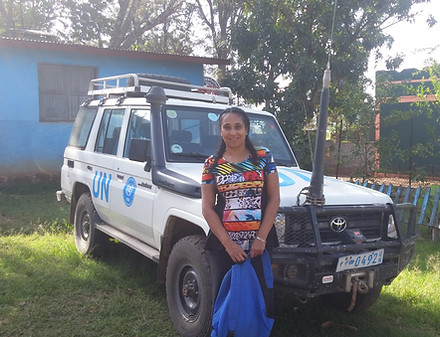
My name is Tabasum Abdul-Rasul, and as a stand by partner for CANADEM, I was deployed to WHO Ethiopia as their Sub-National Health Cluster Coordinator.

The main objective of the “health cluster” is to strengthen overall preparedness and to improve responses to humanitarian emergencies with appropriate health interventions. My main role is to coordinate health agencies in order to improve the management of information, support on the ground, access to equipment and essential drugs, and to build the capacities of the stakeholders’ working on the ground.

With other UN agencies and NGOs, I conduct joint missions in villages and camps, and any area affected by a natural or man-made disaster. This allows us to assess needs and provide concrete actions and resources. We can therefore conduct adequate advocacy at the government level to improve the situation.

First, I spent a few months in Hawassa in the ‘Southern Nationalities Peoples’ Region’, next to the Kenyan border. While stationed there I worked to settle a local cluster mechanism, supported the cholera emergency response, as well as the crisis of floods and landslides that hit the region.

After this complex task, the WHO Regional Office deployed me to Gambella in the western region of Ethiopia, to support UNHCR and other agencies in hosting many refugees from the South Sudan.

Every morning at 6:00 AM, I leave my guest house to work at different the entry points to support the mass arrival of refugees. I supervise and help with vaccinations and visit other NGOs to assess their needs and gaps.

Mass vaccination of children is conducted daily to prevent two key diseases: polio and measles. Systematic deworming with Mebendazole and Vitamin A are also routinely performed for children less than two years old. Vitamin A is distributed to prevent serious deficiencies due to malnutrition. Ensuring good immunization coverage to prevent epidemics and disease associated with nutritional deficiency, is essential.

When I come home at night, I am achy. Work in the refugee camps is not simple. Moist heat is overwhelming in Gambella, the security is volatile and random, and the living conditions are not easy.

We are hundreds of aid workers, international and national experts, who support efforts to address the emergency raging in Ethiopia right now. Every day we struggle to make better living conditions for disadvantaged populations.

Humanitarian work is a profession that requires a lot of flexibility, great courage and enormous patience. Humanitarian workers are also expected to have the ability to negotiate to assert the rights of disadvantaged people.

Like me, other CANADEM associates are working in the country to support the international organizations, including the UN.

I am proud and extremely grateful to work for CANADEM, an agency that promotes this humanitarian work, through the deployment of experts to support the efforts of the UN and international organizations worldwide.

More Inspiring Stories

UNICEF-South Sudan

September 29, 2025
Read a photo journal of CANADEM consultant Jan Gerrit Brouwer was deployed to South Sudan with UNICEF
UNHCR-Jordan

September 29, 2025
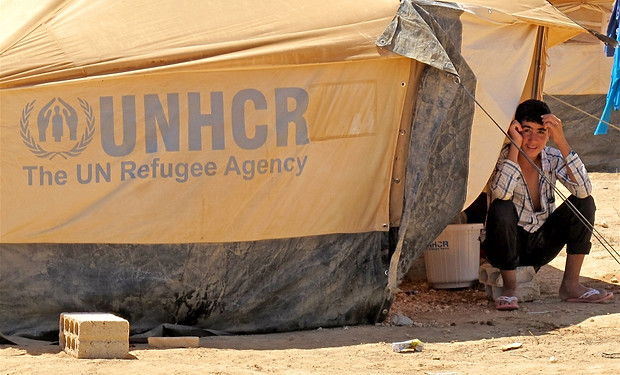
Read Phillip's interview with Mr. Mahmoud Othman, a Damascus resident who found refuge in Amman

UNICEF-Croatia

September 29, 2025
Read Elaine's story, a CANADEM consultant deployed to Croatia with UNICEF
WFP-CAR

September 29, 2025
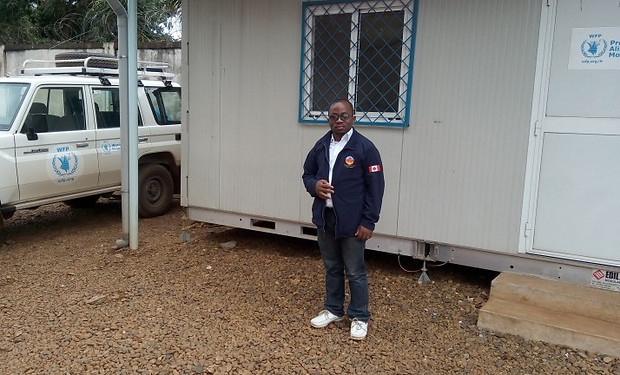
Read the biography of Ernest-Moise Mushekuru, Food Security Cluster Coordinator in Central African Republic

UNFPA-Brazil

September 29, 2025
Read Tatiana Almeida's story, CANADEM's Communication Specialist in Brazil
UNICEF-Ethiopia

September 29, 2025
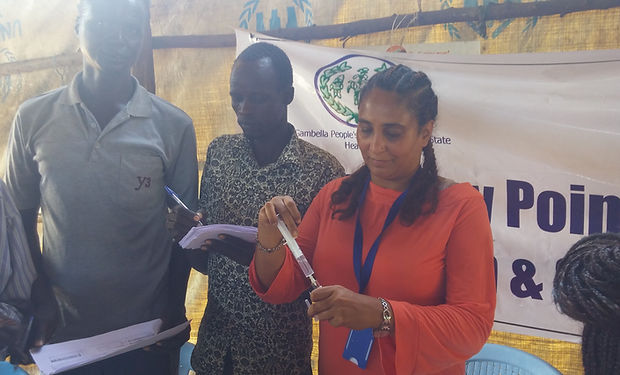
Read Tabasum Abdul-Rasul's story as a Sub-National WASH Cluster Coordinator in Ethiopia

Respect for the environment
An ever-increasing awareness that caring for the environment is the responsibility of us all, regardless of our area of expertise or profession, has propelled CANADEM to place more focus on our own global footprint as well as that of our sector. During this Period, we have embarked on a challenge to enhance our learning regarding the environment and how we interact with it – including efforts to create a baseline and targets for improving how we deal with our natural environment. We are therefore making a conscious and transparent effort to measure and manage the way we affect the natural world around us, hopefully becoming better caretakers along the way.
Impact Driven
CANADEM has always valued the positive impact we make in the world as a foundation of our work. It is this guiding principle that has led us to form lasting partnerships, in support of other entities, if we feel they can add greater value than we can at CANADEM. Searching for our comparative advantage, while avoiding falling into a simple race to find funding opportunities, is therefore essential to CANADEM. As we see an increasing number of individuals suffering from the consequences of conflict in the world, and prepare for even greater numbers of environmental disasters, the need to prioritise the areas where we can make a real difference and combine our efforts with like-minded entities, is vital to achieving success.
Efficiency
The objective of CANADEM’s leadership has always been to find the most innovative and cost-effective ways to contribute to communities in need, and not to place the growth of numbers and our budgets at the centre of our efforts. As a result, we have adopted a light footprint in terms of our human resources complement and infrastructure, making use of the latest technology, and empowering our small team to be as innovative and flexible in solving problems as our procedures allow. Our structures allow us to scale up and down as required, and for staff to work in different teams, according to the needs of the moment. Our 30 years of experience has taught us what our core capacities are and how to allocate precious resources.
Accountability & Transparency Values
From CANADEM’s earliest beginnings as a Government of Canada project, and during its rapid evolution into an independent NGO with its roots in international service, the principles of accountability and transparency have been a component of CANADEM’s DNA. Accountability for the use of public funds has been incorporated into procedures that needed to respond to the high standards of government. Transparency has been the vehicle to ensure the vital accountability that CANADEM maintains. CANADEM’s headquarters team is a well-trained group of committed individuals who believe in the important work they do – including the conviction that providing the best value possible to the communities and donors we serve is a primary component of our job. CANADEM’s rules and procedures are therefore established to ensure that every step of the way we are confident of our work, and can demonstrate its efficiency and effectiveness.
People-Centered Values
Our work is about deploying people to help people. It is therefore of paramount importance to us that we are all relating to individuals in our chain of service delivery in a way that is respectful, understanding, considerate, and that brings out the best in us. Our internal working context is designed to foster humanity, fairness and support among our staff, which in turn aims to foster those same qualities among the experts we deploy. We have invested in a team of individuals (our Duty of Care Team), who provide a safety net for those experts we deploy. By taking care of our staff members and our deployed experts, we ensure that we have an effective flow of communication between all aspects of our operation. Our experienced and motivated staff feel supported, and are in turn able to support our experts in times of stress and prevent any potential problems from occurring.
Diversity & Inclusion Values
Ensuring an inclusive workplace that integrates diversity in terms of gender, language, culture, ethnicity and religion, is of prime importance for CANADEM both internally and with regards to our work with partners. We have made significant progress in attracting experts from 178 countries around the world – including from countries that are recipients of international assistance – so that a diversity of perspectives, understanding and expertise may be integrated into all operations that CANADEM supports. From our fair and transparent selection process, to our supportive Duty of Care Team (which ensures that individuals deployed have the resources they need to feel comfortable and confident in their work), we have invested significant energy in fostering diversity and inclusion within our roster system, in our election monitoring deployments, and in our own direct implementation of programming, at headquarters and in the field.
Partnership Values
The majority of our experts work within the assistance operations of our partners. Partnership is therefore of primary importance and value to us, and is key to the way we operate. Our many long-term relationships with other actors have been forged by promoting trust and understanding. The ability to work together with other actors, and not in competition, has allowed CANADEM to enhance the work of governments or organizations by injecting vital expertise, and targeting it where it is needed most. We believe that we can create a greater impact, when we work in partnership.