

CANADEM

UNFPA-Brazil


The Zika virus is a mosquito-borne infection that was first identified in Uganda in 1947. Since then, outbreaks of the virus have been recorded in Africa, the Americas, Asia and the Pacific causing human infections from 1960s to 1980s.


In Brazil, after 40 years of battling endemic yellow fever and dengue, it was unlikely to presume that a mosquito born disease, such as Chikungunya and Zika, would lead to a worldwide public health emergency with millions being infected with the virus and thousands of children developing Zika congenital infection.


In Brazil, the human impacts of the epidemic are devastating.

Tatiana Almeida, a CANADEM associate, was deployed to Brazil with the United Nations Population Fund (UNFPA) as a Communications Specialist from May to October 2016 with the support from the Government of the United Kingdom’s Department for International Development (DFID). Her main mission was to design and implement a communication strategy that would contribute to promoting human rights in the context of the ongoing epidemic. 

Social inequalities at the heart of the Zika outbreak

Facing a Zika health emergency, nations responded with vector control and epidemiological surveillance. However social, economic, political and environmental determinants behind Zika indicates that decades of prevalent social inequalities, such as limited access to running water and sanitation, exposed Brazil’s most vulnerable populations to the virus.

The most affected populations included women, youth and African descendants. I’ve been in communities where nearly 90% of its inhabitants had Zika, dengue or chikungunya during the outbreak. Taking advantage of my experience as a journalist, I focused my efforts in providing a human rights-based picture of the reality of Zika in Brazil with the help of those who so kindly shared their personal story with me.

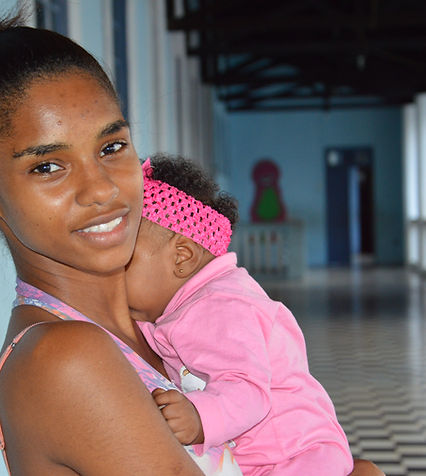
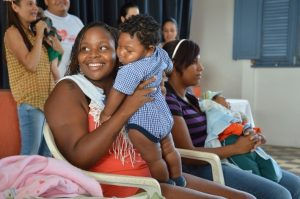
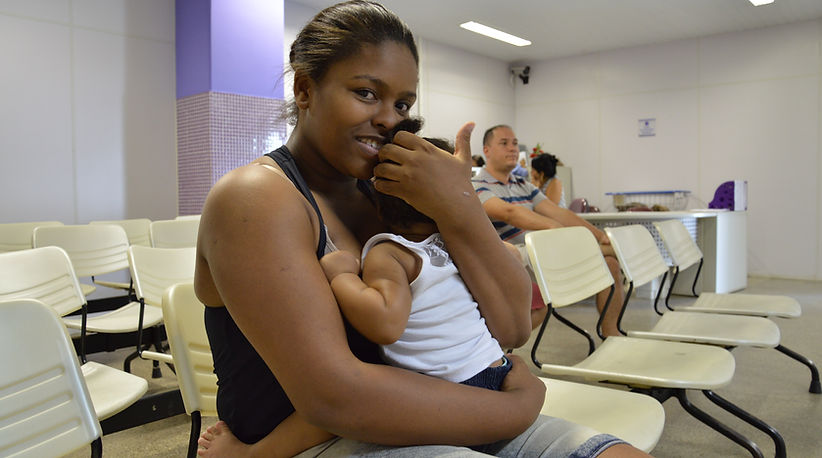
Those infected by the virus include a high percentage of adolescent mothers or unplanned pregnancies, most with little access to information on sexual and reproductive health rights, or Zika prevention (including zika virus sexual transmission). Those infected also included individuals experiencing an increasing number of microcephaly and other nervous system related syndromes.


“I had  Zika. I had everything poor people are entitled to.” – Eunice, a member of the Calafate Women’s Collective, a UNFPA partner organization that aims to end gender-based violence and promote women’s health and rights. 


Unplanned pregnancies: UNFPA estimates that in Brazil alone, between 3.5 and 4.2 million women of reproductive age are estimated to have unmet needs in terms of access to family planning and contraception. The access of women and couples to contraceptives remains a challenge, and the available data suggests that the access to reproductive health information and resources is unequal among women.

Adolescent mothers: In Brazil, 20% of mothers are less than 20 years old, and 40% of them leave school to concentrate on motherhood.

“Near-miss”: Women who almost lose their lives during or after a delivery progress in reducing maternal deaths have been slow in most countries. UNFPA is the lead UN agency working to deliver a world where every pregnancy is wanted, every childbirth is safe and every young person´s potential is fulfilled.

Women empowerment: In March 2016 the UNFPA Executive Director, Babatunde Osotimehin, urged governments to provide information and guarantee access to family planning, as the only way women can make well informed decisions about their reproductive health and rights, and to protect themselves from the Zika virus disease since the confirmation of the risk of sexual transmission.

UNFPA is working with Brazilian state and municipal officials to respond to these increased demands. UNFPA and its partners – including CANADEM, DFID, the Government of Japan and the Oswaldo Cruz Foundation – are working to improve access to reproductive health information and services, and to increase access to contraceptives. This partnership prioritizes the most vulnerable women, including teenagers and women of African descent, and those living in areas with the highest incidence of microcephaly.

“Get together for More Rights, Less Zika”

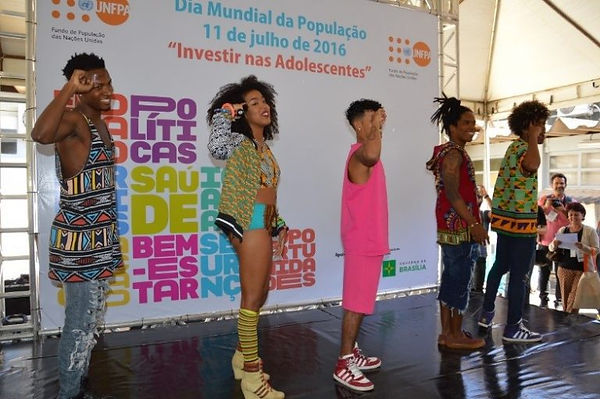
Created by Dream Team do Passinho, Funk music stars from Rio de Janeiro’s favela communities, the song “More Rights, Less Zika” was by far my biggest achievement as part of youth engagement and women empowerment communication strategies. The band partnered with UNFPA to produce the song, which has been a hit among concert-goers and on Brazilian radio.

The song urges listeners to use condoms to prevent the sexual transmission of the disease, and draws attention to the fact that Zika is disproportionately affecting poor, marginalized communities. As the song, says, “the fault isn’t the mosquito’s only”.

The group’s members – Lellêzinha, Rafael Mike, Hiltinho, Diogo Breguette and Pablo – all grew up in Rio de Janeiro’s marginalized communities. “We identified with the cause because people who suffer with Zika virus live in favelas and are young people of African descent just like us,” said 18-year-old Lellêzinha.

The song also rebukes the prejudice that often affects mothers whose infants are born with Zika-related health problems, calling instead for compassion and empowerment for “the girl who became pregnant in the slum where there’s no proper sanitation / and the baby with microcephaly whose dad faded away.”

“I am most thankful to CANADEM and the United Kingdom’s Department for International Development (DFID) for supporting and funding my mission in Brazil, I pledge the international community to continue donating and improving life conditions of vulnerable communities in Brazil. I can assure you that they are taking the lead in promoting the changes they wish to see in their country and your support will indeed make a difference!”


Read more of Tatiana Almeida’s stories from the field by visiting the UNFPA Brazil website (in Portuguese).

More Inspiring Stories

UNICEF-South Sudan

September 29, 2025
Read a photo journal of CANADEM consultant Jan Gerrit Brouwer was deployed to South Sudan with UNICEF
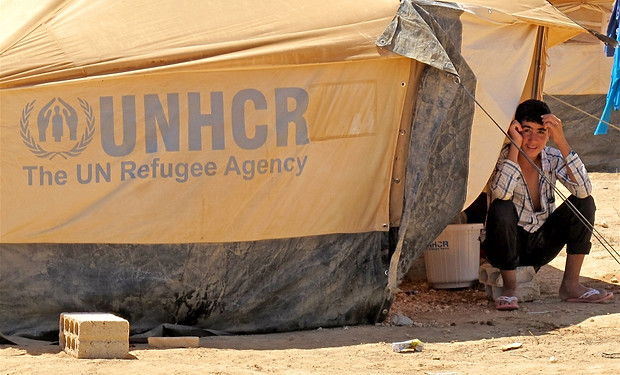
UNHCR-Jordan

September 29, 2025
Read Phillip's interview with Mr. Mahmoud Othman, a Damascus resident who found refuge in Amman

UNICEF-Croatia

September 29, 2025
Read Elaine's story, a CANADEM consultant deployed to Croatia with UNICEF
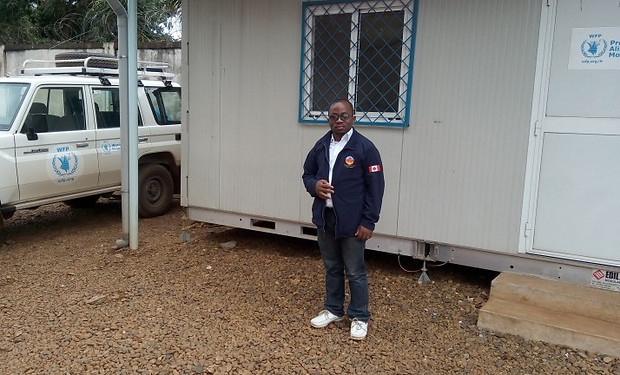
WFP-CAR

September 29, 2025
Read the biography of Ernest-Moise Mushekuru, Food Security Cluster Coordinator in Central African Republic

UNFPA-Brazil

September 29, 2025
Read Tatiana Almeida's story, CANADEM's Communication Specialist in Brazil
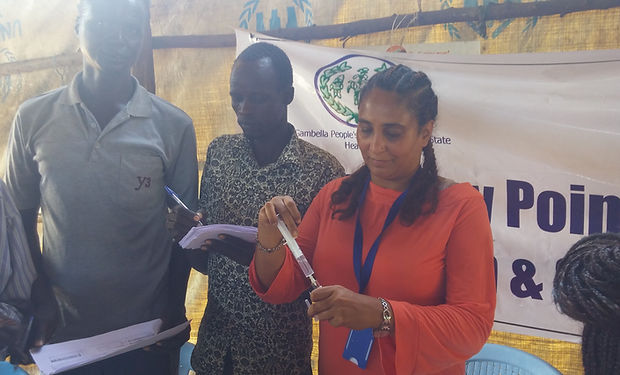
UNICEF-Ethiopia

September 29, 2025
Read Tabasum Abdul-Rasul's story as a Sub-National WASH Cluster Coordinator in Ethiopia

Respect for the environment
An ever-increasing awareness that caring for the environment is the responsibility of us all, regardless of our area of expertise or profession, has propelled CANADEM to place more focus on our own global footprint as well as that of our sector. During this Period, we have embarked on a challenge to enhance our learning regarding the environment and how we interact with it – including efforts to create a baseline and targets for improving how we deal with our natural environment. We are therefore making a conscious and transparent effort to measure and manage the way we affect the natural world around us, hopefully becoming better caretakers along the way.
Impact Driven
CANADEM has always valued the positive impact we make in the world as a foundation of our work. It is this guiding principle that has led us to form lasting partnerships, in support of other entities, if we feel they can add greater value than we can at CANADEM. Searching for our comparative advantage, while avoiding falling into a simple race to find funding opportunities, is therefore essential to CANADEM. As we see an increasing number of individuals suffering from the consequences of conflict in the world, and prepare for even greater numbers of environmental disasters, the need to prioritise the areas where we can make a real difference and combine our efforts with like-minded entities, is vital to achieving success.
Efficiency
The objective of CANADEM’s leadership has always been to find the most innovative and cost-effective ways to contribute to communities in need, and not to place the growth of numbers and our budgets at the centre of our efforts. As a result, we have adopted a light footprint in terms of our human resources complement and infrastructure, making use of the latest technology, and empowering our small team to be as innovative and flexible in solving problems as our procedures allow. Our structures allow us to scale up and down as required, and for staff to work in different teams, according to the needs of the moment. Our 30 years of experience has taught us what our core capacities are and how to allocate precious resources.
Accountability & Transparency Values
From CANADEM’s earliest beginnings as a Government of Canada project, and during its rapid evolution into an independent NGO with its roots in international service, the principles of accountability and transparency have been a component of CANADEM’s DNA. Accountability for the use of public funds has been incorporated into procedures that needed to respond to the high standards of government. Transparency has been the vehicle to ensure the vital accountability that CANADEM maintains. CANADEM’s headquarters team is a well-trained group of committed individuals who believe in the important work they do – including the conviction that providing the best value possible to the communities and donors we serve is a primary component of our job. CANADEM’s rules and procedures are therefore established to ensure that every step of the way we are confident of our work, and can demonstrate its efficiency and effectiveness.
People-Centered Values
Our work is about deploying people to help people. It is therefore of paramount importance to us that we are all relating to individuals in our chain of service delivery in a way that is respectful, understanding, considerate, and that brings out the best in us. Our internal working context is designed to foster humanity, fairness and support among our staff, which in turn aims to foster those same qualities among the experts we deploy. We have invested in a team of individuals (our Duty of Care Team), who provide a safety net for those experts we deploy. By taking care of our staff members and our deployed experts, we ensure that we have an effective flow of communication between all aspects of our operation. Our experienced and motivated staff feel supported, and are in turn able to support our experts in times of stress and prevent any potential problems from occurring.
Diversity & Inclusion Values
Ensuring an inclusive workplace that integrates diversity in terms of gender, language, culture, ethnicity and religion, is of prime importance for CANADEM both internally and with regards to our work with partners. We have made significant progress in attracting experts from 178 countries around the world – including from countries that are recipients of international assistance – so that a diversity of perspectives, understanding and expertise may be integrated into all operations that CANADEM supports. From our fair and transparent selection process, to our supportive Duty of Care Team (which ensures that individuals deployed have the resources they need to feel comfortable and confident in their work), we have invested significant energy in fostering diversity and inclusion within our roster system, in our election monitoring deployments, and in our own direct implementation of programming, at headquarters and in the field.
Partnership Values
The majority of our experts work within the assistance operations of our partners. Partnership is therefore of primary importance and value to us, and is key to the way we operate. Our many long-term relationships with other actors have been forged by promoting trust and understanding. The ability to work together with other actors, and not in competition, has allowed CANADEM to enhance the work of governments or organizations by injecting vital expertise, and targeting it where it is needed most. We believe that we can create a greater impact, when we work in partnership.