
CANADEM

UNFPA-Mozambique


~ Mobilizing Assistance ~
Ken Otieno in Mozambique with UNFPA
– GBV AoR Coordinator –
– GBV Case Management Spec. –
– GBV in Emergencies Spec. – 


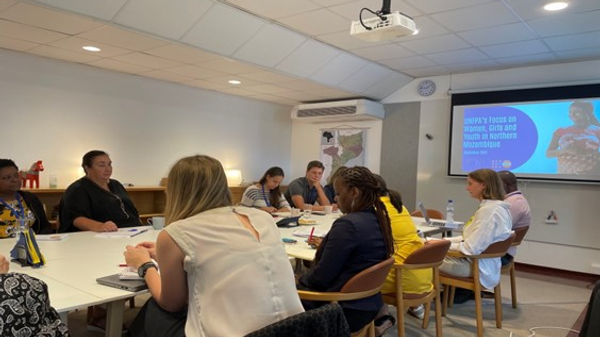
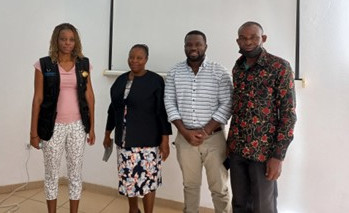
Ken Otieno has been deployed to Pemba, Mozambique with UNFPA from March 2022 where he has so far served in three roles. He first deployed as GBV AoR coordinator, then as GBV case management specialist and now as GBV in emergencies specialist.

​Ken was deployed to Northern Mozambique on surge to support humanitarian response due to the ongoing-armed conflict and climatic shocks that are characterized by cyclones. According to the 2023 Humanitarian Needs Overview, an estimated two million people in northern Mozambique are in need of some form of humanitarian assistance, including 945,000[1] people displaced by the conflict, individuals from surrounding host communities and those who have returned to their home districts in the course of the year.

The northern districts have also faced years of attacks by the None-state Armed Groups (NSAGs) and have only become recently accessible while others have remained partially accessible. The ongoing joint missions by the national and international military has led to liberation of several districts previously occupied by the NSAGs. Over the last five years, the counter attacks and threats by Non-State Armed Groups (NSAGs) in Northern Mozambique has led to untold suffering, atrocities and gross violations of human rights, notably through, torture, kidnapping, rape, forced marriage and forced pregnancies, particularly in Cabo Delgado and, more recently, in Nampula and Niassa

In the last 9 months of his deployment, Ken has played a critical role in supporting UNFPA Mozambique in leading coordinating the GBV Area of Responsibility. Through his contribution, UNFPA has been able to promote accessible, safe and quality delivery of GBV services by the UN, INGOs and national NGOs, enhanced GBV risk mitigation efforts across different sectors such as WASH and Health and strongly advocated for funding opportunities for specialized GBV services across new accessible districts in Northern Mozambique.  In his role as GBV case management specialist, Ken has been able to lead the GBV case management capacity building initiative in Northern Mozambique, which led to the training and identification of a pool of trainers on GBV case management in the provinces of Nampula and Cabo Delgado. Ken has also led the initial phases of the roll of out of the Gender based Violence information management system which will greatly improve the collection, storage and sharing of GBV incident data among GBV service providers.

The impact of the ongoing kidnappings in Northern Mozambique coupled with dire economic conditions upon release cannot be overstated, with clear linkages to sexual exploitation and abuse. Most of the women and girls once released may not easily find job opportunities putting them at higher risk of transactional sex among other negative coping mechanisms as they may not have the required skill set and/or education as many, especially girls may have lost years of education while in captivity. In addition women and girls returning from captivity are often facing discrimination and stigma in their communities and thus many choose to go to the cities, especially those returning while pregnant or with children. With no source of income, they are forced to live in informal settlements where they share small, crowded spaces. Some girls may be forced to live on their own without parents and who may be missing or dead (as a result NSAGs attacks in their villages) putting them at very high risks of sexual exploitation and abuse.  In his current role as GBV in Emergencies specialist, Ken continues to support fundraising efforts to mobilize resources to meet the reintegration needs of women and girls released from captivity owing to the ongoing insurgency and counter insurgency in the Northern provinces.

More Inspiring Stories

UNICEF-South Sudan

September 29, 2025
Read a photo journal of CANADEM consultant Jan Gerrit Brouwer was deployed to South Sudan with UNICEF
UNHCR-Jordan

September 29, 2025
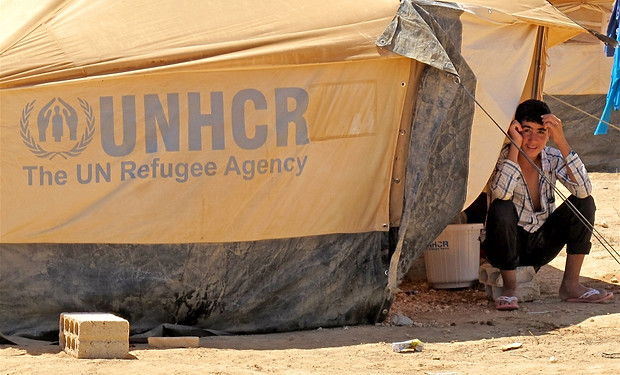
Read Phillip's interview with Mr. Mahmoud Othman, a Damascus resident who found refuge in Amman

UNICEF-Croatia

September 29, 2025
Read Elaine's story, a CANADEM consultant deployed to Croatia with UNICEF
WFP-CAR

September 29, 2025
Read the biography of Ernest-Moise Mushekuru, Food Security Cluster Coordinator in Central African Republic

UNFPA-Brazil

September 29, 2025
Read Tatiana Almeida's story, CANADEM's Communication Specialist in Brazil
UNICEF-Ethiopia

September 29, 2025
Read Tabasum Abdul-Rasul's story as a Sub-National WASH Cluster Coordinator in Ethiopia

Respect for the environment
An ever-increasing awareness that caring for the environment is the responsibility of us all, regardless of our area of expertise or profession, has propelled CANADEM to place more focus on our own global footprint as well as that of our sector. During this Period, we have embarked on a challenge to enhance our learning regarding the environment and how we interact with it – including efforts to create a baseline and targets for improving how we deal with our natural environment. We are therefore making a conscious and transparent effort to measure and manage the way we affect the natural world around us, hopefully becoming better caretakers along the way.
Impact Driven
CANADEM has always valued the positive impact we make in the world as a foundation of our work. It is this guiding principle that has led us to form lasting partnerships, in support of other entities, if we feel they can add greater value than we can at CANADEM. Searching for our comparative advantage, while avoiding falling into a simple race to find funding opportunities, is therefore essential to CANADEM. As we see an increasing number of individuals suffering from the consequences of conflict in the world, and prepare for even greater numbers of environmental disasters, the need to prioritise the areas where we can make a real difference and combine our efforts with like-minded entities, is vital to achieving success.
Efficiency
The objective of CANADEM’s leadership has always been to find the most innovative and cost-effective ways to contribute to communities in need, and not to place the growth of numbers and our budgets at the centre of our efforts. As a result, we have adopted a light footprint in terms of our human resources complement and infrastructure, making use of the latest technology, and empowering our small team to be as innovative and flexible in solving problems as our procedures allow. Our structures allow us to scale up and down as required, and for staff to work in different teams, according to the needs of the moment. Our 30 years of experience has taught us what our core capacities are and how to allocate precious resources.
Accountability & Transparency Values
From CANADEM’s earliest beginnings as a Government of Canada project, and during its rapid evolution into an independent NGO with its roots in international service, the principles of accountability and transparency have been a component of CANADEM’s DNA. Accountability for the use of public funds has been incorporated into procedures that needed to respond to the high standards of government. Transparency has been the vehicle to ensure the vital accountability that CANADEM maintains. CANADEM’s headquarters team is a well-trained group of committed individuals who believe in the important work they do – including the conviction that providing the best value possible to the communities and donors we serve is a primary component of our job. CANADEM’s rules and procedures are therefore established to ensure that every step of the way we are confident of our work, and can demonstrate its efficiency and effectiveness.
People-Centered Values
Our work is about deploying people to help people. It is therefore of paramount importance to us that we are all relating to individuals in our chain of service delivery in a way that is respectful, understanding, considerate, and that brings out the best in us. Our internal working context is designed to foster humanity, fairness and support among our staff, which in turn aims to foster those same qualities among the experts we deploy. We have invested in a team of individuals (our Duty of Care Team), who provide a safety net for those experts we deploy. By taking care of our staff members and our deployed experts, we ensure that we have an effective flow of communication between all aspects of our operation. Our experienced and motivated staff feel supported, and are in turn able to support our experts in times of stress and prevent any potential problems from occurring.
Diversity & Inclusion Values
Ensuring an inclusive workplace that integrates diversity in terms of gender, language, culture, ethnicity and religion, is of prime importance for CANADEM both internally and with regards to our work with partners. We have made significant progress in attracting experts from 178 countries around the world – including from countries that are recipients of international assistance – so that a diversity of perspectives, understanding and expertise may be integrated into all operations that CANADEM supports. From our fair and transparent selection process, to our supportive Duty of Care Team (which ensures that individuals deployed have the resources they need to feel comfortable and confident in their work), we have invested significant energy in fostering diversity and inclusion within our roster system, in our election monitoring deployments, and in our own direct implementation of programming, at headquarters and in the field.
Partnership Values
The majority of our experts work within the assistance operations of our partners. Partnership is therefore of primary importance and value to us, and is key to the way we operate. Our many long-term relationships with other actors have been forged by promoting trust and understanding. The ability to work together with other actors, and not in competition, has allowed CANADEM to enhance the work of governments or organizations by injecting vital expertise, and targeting it where it is needed most. We believe that we can create a greater impact, when we work in partnership.