
CANADEM

UNFPA-Ukraine


~ An Overwhelming Need ~
Primo Madra with UNFPA in Ukraine
Sexual and Reproductive Health Coordinator


The war in Ukraine has had a serious impact on people’s ability to access health care. According to WHO’s surveillance data on attacks on health services, the Russian invasion of Ukraine in February 2022 led to partial or total destruction of hundreds of health facilities by missile attacks. Heavy shelling has also caused massive population displacements from the eastern, north-eastern, and south-eastern parts of the country towards relatively more secure areas in the western parts of the country. Millions even had to cross the border to seek refuge in neighboring countries.

The influx of the Internally Displaced Persons (IDPs) overwhelmed health facilities in the receiving host areas within Ukraine. Health workers were overworked, and they had to work under very stressful conditions in the midst of continuous missile attacks. Many health workers have also fled from the war. Supplies ran short before the next resupply as the normal health supplies systems were disrupted.

According to the UN Office for the Coordination of Humanitarian Affairs (OCHA), in 2022, over 14 million people needed assistance to access health care. This included 9.4 million women of reproductive age of whom over 250,000 were pregnant and some 80,000 delivered every quarter. Skilled care during pregnancy and at childbirth are of utmost importance and must be maintained even during war times to prevent escalation of maternal and newborn deaths and ill health. Women who needed continued supply of contraceptives to avoid unintended pregnancy particularly during the period of crisis must also be provided for. Women and girls’ rights must therefore remain at the center of humanitarian response and their rights to give birth safely and to live in peace cannot be put on hold in times of war.

International partners as well as local NGOs came in to support the government to ensure continued access to health care for the affected populations. It is crucial that partners have coordinated action to avoid duplication of efforts and ensure that their combined interventions were complementary and synergistic. It is also important to ensure that the most vulnerable populations are identified and assisted. Yet the pre-crisis coordination mechanism during normal times led by government has been somewhat compromised in the wake of the crisis. The humanitarian cluster coordination system was therefore activated to support government to ensure a coordinated response.   

I was deployed by CANADEM as a Sexual Reproductive Health Coordinator with United Nations Population Fund (UNFPA). One of my roles was to lead the Sexual Reproductive Maternal and Child Health (SRMCH) Technical Working Group under the Health Cluster to support coordination of sexual reproductive Health services and ensure that the people affected by the crisis had access to lifesaving reproductive health services.

Our actions were guided by the humanitarian standard for sexual reproductive health, that is, the Minimum Initial Service Package for reproductive health, which is a package of sexual reproductive health interventions that have been proven to be most effective in preventing escalation of deaths and ill health due to sexual reproductive health conditions in crisis settings.

The SRMCH coordination forum brought together more than 50 agencies with expertise in provision of sexual reproductive maternal and child health care services. The platform enabled Ukrainian government and health care workers to closely engage with their international counter partners who have had experience in delivering sexual reproductive health interventions in crisis settings elsewhere to come out with contextualized solutions that kept services going even after the disruption of health system caused by the crisis.

“At the height of the crisis we were overwhelmed with heavy influx of IDPs although activities have now somewhat stabilized and become more planned, thanks to the help of international partners who have shared successful practices and strategies appropriate to these conditions and provided sorely needed supplies”, said a director of a health facility in Vinnytsia Oblast during a coordination meeting.

“… the delivery strategy and delivery practices were changed, bomb shelters were adapted for delivery, as well as the practice of working with women in women’s consultations and family practice doctors were changed, she added.

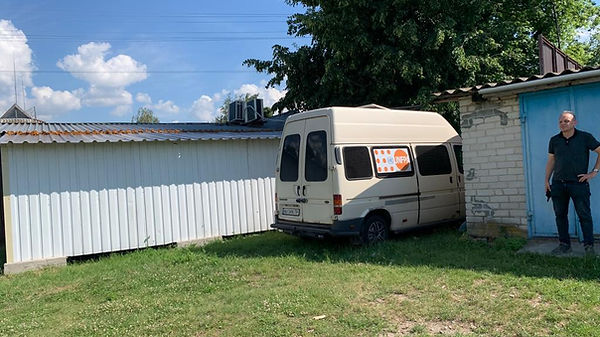
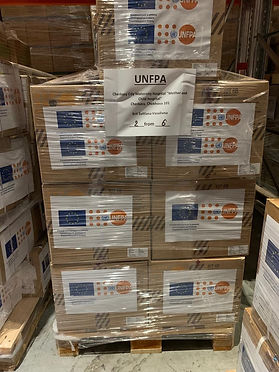
The distribution of the Inter-Agency Reproductive Health Kits (IARH Kits) that are needed for implementation of the reproductive health package in crisis settings was also discussed in these meetings. The IARH kits that are packaged and stockpiled by UNFPA where designed ready for rapid deployment at the onset of a crisis anywhere in the world. UNFPA delivered and distributed reproductive health kits to cover the needs of over 5 million women and by end of October 2022, more than 10,000 women were served with various reproductive health services through UNFPA supported mobile teams.

The kits provided by UNFPA proved very useful in this setting as testified by a health facility director in Vinnytsia: “The Inter-Agency Reproductive Health Kits provided by UNFPA were very useful indeed. For example, the sterilizers contained in these kits that did not need electricity were particularly useful following power outages which have become common due to the missile strikes. The sterilizers we had in the hospital all needed electricity”.


The coordination mechanism that was setup in Ukraine therefore helped to bring together humanitarian partners to closely engage with the local health authorities to ensure that the most affected populations were reached so that no one was left behind in terms of sexual reproductive health care. The support helped to ensured that women and girls’ rights remained at the center of the humanitarian response in Ukraine so that their rights to give birth safely and to live in peace were not neglected during this war.

More Inspiring Stories

UNICEF-South Sudan

September 29, 2025
Read a photo journal of CANADEM consultant Jan Gerrit Brouwer was deployed to South Sudan with UNICEF
UNHCR-Jordan

September 29, 2025
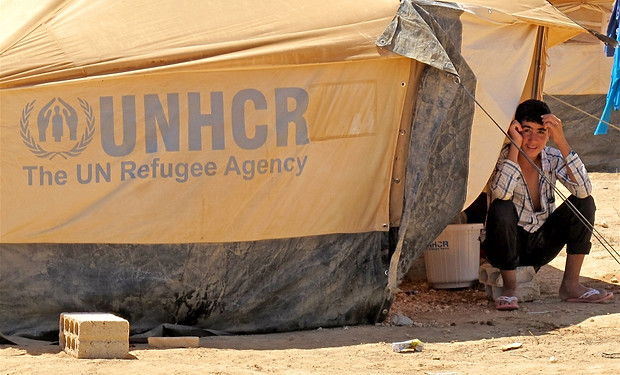
Read Phillip's interview with Mr. Mahmoud Othman, a Damascus resident who found refuge in Amman

UNICEF-Croatia

September 29, 2025
Read Elaine's story, a CANADEM consultant deployed to Croatia with UNICEF
WFP-CAR

September 29, 2025
Read the biography of Ernest-Moise Mushekuru, Food Security Cluster Coordinator in Central African Republic

UNFPA-Brazil

September 29, 2025
Read Tatiana Almeida's story, CANADEM's Communication Specialist in Brazil
UNICEF-Ethiopia

September 29, 2025
Read Tabasum Abdul-Rasul's story as a Sub-National WASH Cluster Coordinator in Ethiopia

Respect for the environment
An ever-increasing awareness that caring for the environment is the responsibility of us all, regardless of our area of expertise or profession, has propelled CANADEM to place more focus on our own global footprint as well as that of our sector. During this Period, we have embarked on a challenge to enhance our learning regarding the environment and how we interact with it – including efforts to create a baseline and targets for improving how we deal with our natural environment. We are therefore making a conscious and transparent effort to measure and manage the way we affect the natural world around us, hopefully becoming better caretakers along the way.
Impact Driven
CANADEM has always valued the positive impact we make in the world as a foundation of our work. It is this guiding principle that has led us to form lasting partnerships, in support of other entities, if we feel they can add greater value than we can at CANADEM. Searching for our comparative advantage, while avoiding falling into a simple race to find funding opportunities, is therefore essential to CANADEM. As we see an increasing number of individuals suffering from the consequences of conflict in the world, and prepare for even greater numbers of environmental disasters, the need to prioritise the areas where we can make a real difference and combine our efforts with like-minded entities, is vital to achieving success.
Efficiency
The objective of CANADEM’s leadership has always been to find the most innovative and cost-effective ways to contribute to communities in need, and not to place the growth of numbers and our budgets at the centre of our efforts. As a result, we have adopted a light footprint in terms of our human resources complement and infrastructure, making use of the latest technology, and empowering our small team to be as innovative and flexible in solving problems as our procedures allow. Our structures allow us to scale up and down as required, and for staff to work in different teams, according to the needs of the moment. Our 30 years of experience has taught us what our core capacities are and how to allocate precious resources.
Accountability & Transparency Values
From CANADEM’s earliest beginnings as a Government of Canada project, and during its rapid evolution into an independent NGO with its roots in international service, the principles of accountability and transparency have been a component of CANADEM’s DNA. Accountability for the use of public funds has been incorporated into procedures that needed to respond to the high standards of government. Transparency has been the vehicle to ensure the vital accountability that CANADEM maintains. CANADEM’s headquarters team is a well-trained group of committed individuals who believe in the important work they do – including the conviction that providing the best value possible to the communities and donors we serve is a primary component of our job. CANADEM’s rules and procedures are therefore established to ensure that every step of the way we are confident of our work, and can demonstrate its efficiency and effectiveness.
People-Centered Values
Our work is about deploying people to help people. It is therefore of paramount importance to us that we are all relating to individuals in our chain of service delivery in a way that is respectful, understanding, considerate, and that brings out the best in us. Our internal working context is designed to foster humanity, fairness and support among our staff, which in turn aims to foster those same qualities among the experts we deploy. We have invested in a team of individuals (our Duty of Care Team), who provide a safety net for those experts we deploy. By taking care of our staff members and our deployed experts, we ensure that we have an effective flow of communication between all aspects of our operation. Our experienced and motivated staff feel supported, and are in turn able to support our experts in times of stress and prevent any potential problems from occurring.
Diversity & Inclusion Values
Ensuring an inclusive workplace that integrates diversity in terms of gender, language, culture, ethnicity and religion, is of prime importance for CANADEM both internally and with regards to our work with partners. We have made significant progress in attracting experts from 178 countries around the world – including from countries that are recipients of international assistance – so that a diversity of perspectives, understanding and expertise may be integrated into all operations that CANADEM supports. From our fair and transparent selection process, to our supportive Duty of Care Team (which ensures that individuals deployed have the resources they need to feel comfortable and confident in their work), we have invested significant energy in fostering diversity and inclusion within our roster system, in our election monitoring deployments, and in our own direct implementation of programming, at headquarters and in the field.
Partnership Values
The majority of our experts work within the assistance operations of our partners. Partnership is therefore of primary importance and value to us, and is key to the way we operate. Our many long-term relationships with other actors have been forged by promoting trust and understanding. The ability to work together with other actors, and not in competition, has allowed CANADEM to enhance the work of governments or organizations by injecting vital expertise, and targeting it where it is needed most. We believe that we can create a greater impact, when we work in partnership.